CLET ABRAHAM E LA STREET ART

Camminando per le strade di Roma, Firenze e Milano in quei momenti in cui si è distratti, magari scrivendo al telefono o pensando ad altro, ci si può imbattere in qualcosa di inaspettato.

Alzando la testa dal marciapiede e puntando lo sguardo e il naso all’insù, è possibile scorgere cartelli stradali che, a un certo punto, smettono di essere semplici diventando veri e propri racconti.

I segnali modificati in incursioni notturne non sono frutto di vandalismo, ma vere e proprie opere d’arte di Clet Abraham, il quale attraverso adesivi che non ostacolano la visibilità del cartello inserisce un elemento umano, ironico o provocatorio, che rompe la rigidità del segnale e apre uno spazio di dialogo.

La loro comparsa, sempre più numerosa e silenziosa, oltre a lanciare un monito a riflettere su come la società sia sempre più standardizzata, costretta da regole a discapito dell’espressione e intelligenza individuale, vuole anche regalare un sorriso ai passanti distratti e immersi dalla quotidianità.

LA SUA STORIA:

Clet Abraham racconta di essere partito dalla Francia oltre vent’anni fa e di essere arrivato a Roma quasi per curiosità, grazie a un amico che gli aveva offerto un lavoro come restauratore di mobili. All’inizio infatti il suo percorso era legato all’artigianato, al legno, alla manualità. Ma Roma non è stata solo la città in cui ha iniziato a lavorare ma il luogo che gli ha dato la possibilità di esprimere a pieno se stesso.

Qui ha incontrato una donna tedesca di cui si è innamorato e con cui ha avuto tre figli. Descrive l’amore come la forza che ti trascina nella vita, che ti spinge a fare scelte e a metterti in gioco.

Tutto parte da piccoli quaderni che porta sempre con sé, pieni di schizzi, idee, intuizioni. Disegna ovunque, in qualsiasi momento della giornata. La creatività, non ha bisogno di un momento solenne: può nascere in situazioni quotidiane, anche banali. Successivamente i disegni vengono trasformati in file digitali per produrre adesivi che applica sui cartelli. A volte i suoi cartelli vengono rimossi, alcuni vengono rubati dai privati, e altri è l’amministrazione comunale a sostituirli. Se viene tolto solo l’adesivo, il cartello torna normale; se invece viene cambiato tutto il cartello, probabilmente qualcuno vuole tenerlo.

ANALIZZIAMO LE SUE IDEE:

Clet definisce la parola potere una brutta bestia, si sente dalla parte dell’antipotere e considera il suo lavoro quasi un dovere personale, un modo per mettere in discussione ciò che viene imposto. Restando in tema e parlando di religione invece la considera un altro tipo di potere, non opponendosi alla figura di Cristo che anzi considera molto interessante e quasi rivoluzionario. Secondo lui Gesù era più un libero pensatore che un rappresentante del potere.

Affrontando la politica, non crede che il voto sia lo strumento decisivo per cambiare davvero le cose. Preferisce cercare alternative e mettere in discussione il sistema attraverso la sua arte. È una posizione coerente con la sua visione critica del potere.

IL SUO RAPPORTO CON I SOCIAL

La sua pagina facebook conta tanti seguaci, lui stesso ammette che i social sono importanti perché permettono di documentare le opere di sua produzione. Tuttavia ribadisce che il vero senso del suo lavoro rimane nella strada, nello spazio pubblico, nell’incontro casuale con il passante. Anche grazie ai social il suo stipendio ammonta a 8.000 euro, ma dopo aver speso la metà della somma solo per pagare tasse, gli restano pochissimi soldi per vivere, questo fa capire quanto sia difficile vivere solo di arte.

Molti artisti lo hanno influenzato, tra questi il più celebre è Pieter Bruegel il Vecchio, perché dipingeva scene comprensibili anche a chi non sapeva leggere.

Il suo lavoro è molto più di un semplice gioco visivo. È un modo per mettere in discussione le regole, per inserire ironia dove c’è rigidità, per ricordarci che anche un cartello stradale può diventare uno spazio di libertà. E forse la cosa più bella è proprio questa: accorgersene mentre si cammina distratti, e lasciarsi sorprendere.

yellow box junctions

Traffic lights, roundabouts and yellow box junctions

In England, there are three important traffic management systems. Also in Italy we can find two of them, but with some differences. They are traffic lights, roundabouts and yellow box junctions.

Traffic lights:

Traffic lights in England are similar to those in Italy. They have three colours: green, yellow and red:

  • When the light is green, you can go.
  • When it is yellow, you should stop if it is safe.
  • When it is red, you must stop.

There is a white line on the road before the traffic light. When the light is red, the car must stop before this line.

Roundabouts:

Roundabouts are very common in England: they help traffic move more easily. In England people drive on the left, so you must give way to vehicles coming from the right. When you arrive at a roundabout, look to the right: if a car is coming, you must stop, if the road is clear, you can enter. You must use the indicators: use the left indicator to leave the roundabout, for the last exit, use the signal right and then left.

Roundabouts with traffic lights:

Some roundabouts have traffic lights. You must follow the traffic lights: if the light is red, you stop, if the light is green, you can go, but you must be careful. Traffic lights at roundabouts help reduce traffic and make roads safer. 

Yellow box junctions:

Yellow box junctions have yellow lines in a box shape on the road. They are used to keep junctions clear. You must not enter the yellow box if you cannot leave it immediately. Even with a green light, you must wait if the exit is not free. If you are turning right and waiting for cars coming from the opposite direction, you may stop inside the yellow box. These junctions can be near roundabouts. The rule is the same: enter only if the exit is clear. Stopping in the yellow box without a good reason can cause a fine. We can’t find them in Italy.

limiti

Speed limits

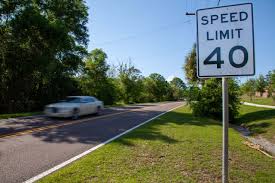
First of all, it is important to remember that in the United Kingdom different units of measurement are used compared to ours, which can make driving a bit challenging at first. Main distances are always measured in miles, while shorter distances—such as the distance from a STOP sign—are measured in yards. Speed limits are shown in miles per hour and, if you are driving a British car, the speedometer also displays speed in miles per hour. Therefore, it is necessary to learn that:

  • 1 mile = 1.60934 kilometres
  • 1 yard = 0.91 metres

British speed limit signs are circular like ours, but the number indicates the maximum speed in miles per hour rather than kilometres. Signs showing a white circle crossed by a black diagonal line indicate that all previously encountered speed limits are no longer valid and that you may resume the normal national speed limit: 60 mph on single carriageway roads and 70 mph on dual carriageways or motorways. Below are two tables: one showing speed limits based on the type of road, and another showing speed limits based on the type of vehicle used.

AreaSpeed limitApprox. km/hNotes
Standard residential areas30 mph~48 km/hMost common urban speed limit
20 mph zones (school areas, historic centres)20 mph~32 km/hVery common in large cities
Main urban/commercial roads30 mph~48 km/hUnless otherwise indicated
Urban arterial roads40 mph~64 km/hAlways signposted
Controlled traffic zonesVariesVariesDepends on local signage
Type of vehicleSingle carriagewayDual carriagewayMotorway
mph / km/hmph / km/hmph / km/h
Cars / motorcycles / car-derived vans up to 2 tonnes60 / 9770 / 11370 / 113
Cars with caravan or trailer50 / 8060 / 9760 / 97
Bus, minibus or coach ≤ 12 m50 / 8060 / 9770 / 113
Bus, minibus or coach ≥ 12 m50 / 8060 / 9760 / 97
Goods vehicle under 7.5 t50 / 8060 / 9770 / 113
Goods vehicle over 7.5 t – England & Wales50 / 8060 / 9760 / 97
Goods vehicle over 7.5 t – Scotland (except A9)40 / 6450 / 8060 / 97
A9 between Perth and Inverness (Scotland only)50 / 8050 / 80N/A

The main differences compared to speed limits in Italy are in the speed limits on the types of roads:

  • Urban Areas (Italy: 50 km/h, UK: 30 mph / 48 km/h): Lower limits in the UK, often with a 20 mph (32 km/h) zone near schools.
  • Extra-Urban Roads (Italy: 90/110 km/h, UK: 60 mph / 96 km/h): The UK has lower limits on single-lane roads.
  • Motorways (Italy: 130 km/h, UK: 70 mph / 112 km/h): Here too, the UK limits are lower, with motorways designated as “Dual Carriageways” at 70 mph.
roadsigns

Road Signs

Road signs in the United Kingdom largely comply with European standards, but they feature some fundamental differences. The main difference lies in the measurement system: distances on signs are not expressed in kilometres, but in miles and yards, following the imperial system. In addition, signs are placed on the left side of the road, consistent with left-hand driving.

Types of Road Signs

Warning Signs:
These have a triangular shape with red borders. Their purpose is to warn drivers of changes in the road layout or potential hazards. Common examples include:

  • Road works.
  • Crossroads or side roads.
  • The possibility of encountering horse riders or migratory toad crossings.

Regulatory Signs:
These signs indicate prohibitions and are typically circular with a red border. Among the most common are:

  • No overtaking.
  • Pedestrian prohibited.
  • The “Stop” sign: it represents the only exception to the circular shape; its distinctive shape and specific red colour are designed to ensure visibility even in adverse weather conditions.

Diversion Signs:
This category is exclusive to the United Kingdom. These signs help drivers rejoin the main route in the event of a road closure. One example is the “solid circle,” used for emergency traffic diversions on motorways and major roads.

Motorway Signs:
On British motorways, signs are large blue panels with white lettering. They provide information on:

  • Junctions and exits, indicating the road number and destination.
  • Alternative directions.
  • The end of motorway regulations (for example: End of motorway regulations in 1 mile).

Regional Particularities:                                                                                           

In Wales, road signage has a unique feature: signs display bilingual text. In addition to English, the local language, Cymraeg (Welsh), is used; its presence on road signs has been officially authorised since 1965.